


Periodontal Treatment in Brisbane: Expert care for gum disease, gum recession, and advanced periodontal conditions
Updated: May 28
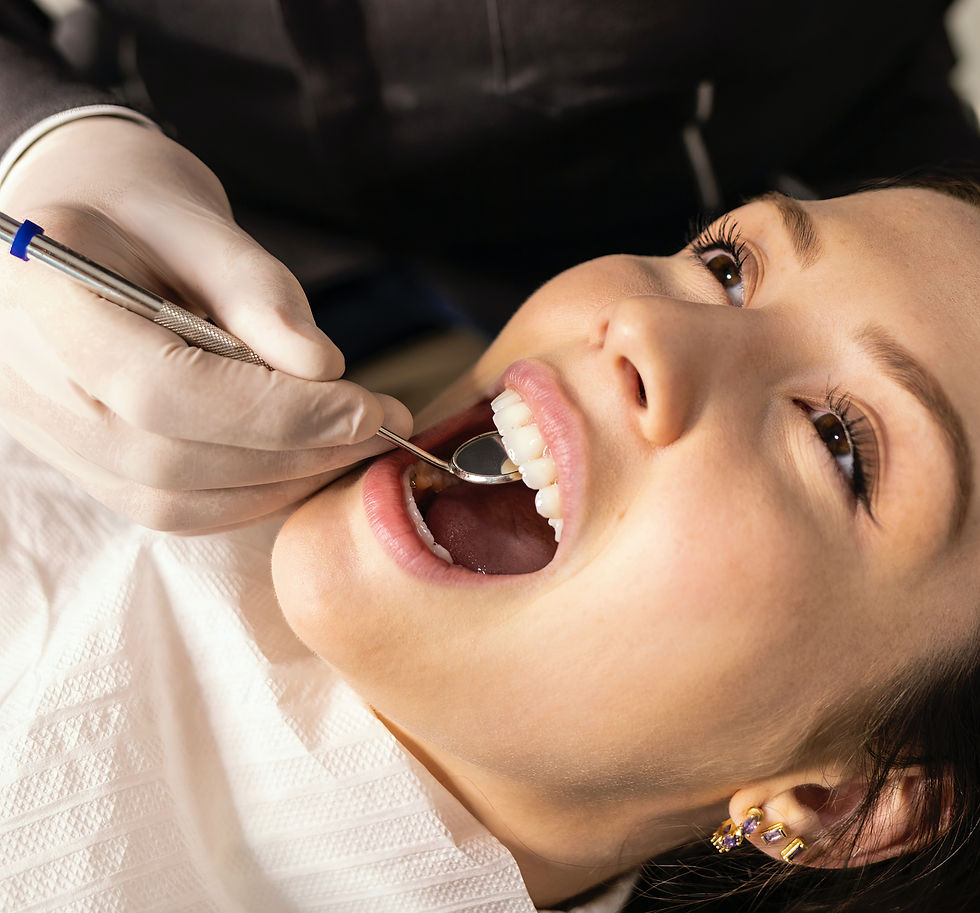
Periodontal disease, commonly called gum disease is one of the most prevalent chronic conditions and one of the leading cause of tooth loss in adults. Despite this, most patients are not aware they have it until it has already progressed beyond the early stage.
At Aminya St Dental in Mansfield, Brisbane, we provide periodontal assessment and treatment as part of our general dental care. For patients identified as high risk, we allocate specific time to explain their risk factors, produce an individual home care plan, perform detailed cleaning of all exposed root surfaces, and place them on an appropriate recall schedule to maintain long-term oral health.
This article explains what periodontal disease is, how it progresses, who is most at risk, what treatment involves, and why early intervention changes the outcome.
What is periodontal disease?
Periodontal disease is an infection of the structures that support the teeth, gums, the periodontal ligament, and the underlying jawbone. It is caused by bacteria in dental plaque that, if not adequately removed, accumulate below the gum line and trigger an inflammatory response.
The disease progresses in two recognised stages:
Gingivitis
The early stage. The gums are inflamed, red, and bleed easily when brushed or probed. At this stage, the damage is limited to the soft tissue and is fully reversible with professional treatment and improved home care. The bone supporting the teeth is not yet affected.
Periodontitis
If gingivitis is not treated, the infection spreads below the gum line. The body's immune response to the bacterial infection causes the breakdown of the bone and connective tissue holding the teeth in place. Pockets form between the teeth and gums, creating space where further bacteria accumulate. Bone loss at this stage is not reversible, once bone is lost, it does not grow back without surgical intervention. The teeth may become loose, shift position, or be lost entirely.
The critical point: periodontitis is largely painless in its early and moderate stages. Patients frequently present with significant bone loss and no history of pain. This is why routine dental examinations that include periodontal charting are the primary way the condition is detected before it reaches an advanced stage.
I brush twice a day, can I still get gum disease?
This is the most common question patients ask when periodontal disease is identified.
Brushing removes plaque from the visible surfaces of the teeth. It does not adequately clean the area between the teeth and below the gum line, which is where periodontal disease begins. Flossing addresses the interdental spaces, but even with thorough flossing, some areas below the gum line are inaccessible without professional instruments.
Additionally, plaque that is not removed hardens into calculus (tartar) within 24 to 72 hours. Calculus cannot be removed by brushing, it requires professional scaling. Once calculus has formed below the gum line, it provides a rough surface for further bacterial accumulation and maintains a constant source of infection regardless of brushing frequency.
Brushing and flossing are essential for maintaining periodontal health and preventing relapse after treatment. They are not sufficient on their own to treat established disease or remove subgingival calculus.
Who is most at risk of periodontal disease?
While all adults are susceptible to some degree, certain factors significantly increase the risk of developing periodontitis or accelerate its progression:
Smoking and tobacco use - the single strongest modifiable risk factor. Smoking impairs the immune response and reduces blood flow to the gums, masking signs of inflammation such as bleeding while allowing the disease to progress more rapidly.
Diabetes - poorly controlled blood sugar increases susceptibility to infection and impairs healing. The relationship is bidirectional: periodontal disease also makes blood glucose control more difficult.
Cardiovascular disease - there is a well-established association between periodontal disease and cardiovascular conditions including heart disease and stroke. The mechanism is not fully understood but is believed to involve the systemic spread of oral bacteria and chronic inflammation.
Pregnancy - hormonal changes during pregnancy increase gum sensitivity and the inflammatory response to plaque. Pregnancy gingivitis is common. Severe periodontal disease in pregnancy has been associated with preterm birth and low birth weight.
Genetic predisposition - some patients have a heightened inflammatory response to periodontal bacteria regardless of their oral hygiene standard. Periodontal disease in a parent or sibling increases individual risk.
Medications - certain medications reduce saliva flow or cause gum tissue changes that increase periodontal risk. These include some antihypertensives, anticonvulsants, immunosuppressants, and antihistamines.
Stress - chronic stress impairs immune function and is associated with increased periodontal disease severity.
Osteoporosis - reduced bone density affects the jaw as well as other bones, and is associated with more rapid periodontal bone loss.
For patients with one or more of these risk factors, periodontal assessment and more frequent monitoring is clinically appropriate even in the absence of obvious symptoms.
The difference between a routine clean and periodontal treatment
A routine scale and clean - the standard six-monthly hygiene appointment- removes plaque and calculus from the visible surfaces of the teeth and just below the gum line. It is appropriate for patients with healthy gums or mild gingivitis.
Periodontal treatment - specifically scaling and root planing - is a more extensive procedure that cleans significantly deeper into the periodontal pockets around each tooth. The root surface is also planed (smoothed) to remove bacterial toxins embedded in the root and to create a clean surface that allows the gum tissue to reattach. Local anaesthetic is typically required because the procedure accesses areas below what a routine clean reaches.
For patients with moderate to severe periodontitis, scaling and root planing is the established non-surgical treatment. It is performed over multiple appointments, usually quadrant by quadrant. It is clinically distinct from a hygiene appointment and cannot be substituted by one.
What periodontal treatment at Aminya St Dental involves
Periodontal risk assessment
For patients identified as high risk, through medical history, examination findings, or both - a dedicated appointment is allocated specifically for risk assessment and education. This is not a routine cleaning appointment. The dentist will explain why the patient is at risk, what the clinical findings mean, and what the treatment and maintenance plan will involve.
Individual home care plan
A standard instruction to 'brush and floss more' is not adequate for periodontal patients. At Aminya St Dental, high-risk patients receive an individual home care plan tailored to their specific clinical presentation. This includes technique assessment and correction for brushing and flossing, recommendations for specific adjuncts where appropriate and clear guidance on what the patient needs to do between appointments to support the clinical treatment.
The effectiveness of professional periodontal treatment depends significantly on what the patient does at home. A home care plan makes that expectation explicit and gives the patient the specific tools and techniques to meet it.
Scaling and root planing
Detailed cleaning of all exposed root surfaces, performed under local anaesthetic. The procedure removes plaque, calculus, and bacterial toxins from deep within the periodontal pockets and smooths the root surface. This removes the source of infection and creates conditions in which the gum tissue can reattach to the tooth.
Multiple appointments are typically required. The number depends on the extent and severity of the disease and the number of teeth affected.
Periodontal recall schedule
After active periodontal treatment, patients are placed on a recall schedule appropriate to their risk level. For most periodontal patients, this means appointments every three to four months rather than the standard six-monthly interval. This is a clinical requirement for maintaining the treatment outcome.
Periodontal disease does not resolve permanently. The bacterial populations that cause it recolonise below the gum line within weeks of treatment. The recall schedule exists to disrupt this recolonisation before it causes further damage. Patients who return to six-monthly recalls after periodontal treatment consistently show disease recurrence at a faster rate than those maintained on a shorter cycle.
Gum disease and systemic health
Periodontal disease is not confined to the mouth. The chronic infection and inflammation associated with periodontitis has established links to a number of systemic health conditions.
Diabetes
The relationship between diabetes and periodontal disease is bidirectional. Diabetic patients have increased susceptibility to infection, including periodontal infection, and heal more slowly after treatment. Conversely, severe periodontal disease makes blood glucose control significantly harder. There is clinical evidence that effective periodontal treatment can improve HbA1c levels in diabetic patients, though this is not a substitute for diabetes management.
Cardiovascular disease
Multiple studies have identified an association between periodontal disease and cardiovascular conditions including coronary artery disease, heart attack, and stroke. The proposed mechanism involves the spread of oral bacteria into the bloodstream and the systemic inflammatory burden of chronic periodontal infection. The relationship is associative rather than definitively causal, but cardiovascular patients are routinely advised to maintain good periodontal health.
Pregnancy
Pregnant patients with periodontal disease have an elevated risk of preterm birth and low birth weight. Pregnancy also increases gum sensitivity and the inflammatory response to plaque, making the gums more vulnerable to gingivitis. Dental treatment including periodontal care is safe during pregnancy and recommended for women with existing gum disease.
Respiratory conditions
There is evidence linking periodontal disease to respiratory infections including pneumonia, particularly in medically compromised or elderly patients. The aspiration of oral bacteria is thought to be the mechanism. For patients with existing respiratory conditions, periodontal control is an additional health consideration.
Signs that warrant a periodontal assessment
Gums that bleed when brushing or flossing - bleeding gums are not normal and indicate inflammation
Gums that appear red, swollen, or puffy rather than firm and pale pink
Gums that have receded, making teeth appear longer than they used to
Persistent bad breath or a bad taste that does not resolve with brushing
Teeth that feel loose or have shifted position
Sensitivity along the gum line
Pain when chewing
Visible calculus (hard deposits) on the teeth, particularly behind the lower front teeth'
The absence of these symptoms does not rule out periodontal disease. Many patients with significant bone loss report no symptoms at all. Regular dental examinations that include probing of the periodontal pockets are the only reliable way to assess periodontal health.
Periodontal treatment at Aminya St Dental, Mansfield Brisbane
Aminya St Dental provides periodontal assessment and treatment for adults across Mansfield, Mt Gravatt, Rochedale South, Wishart, and the broader southside Brisbane area. Patients identified as high risk receive a dedicated risk assessment appointment, an individual home care plan, scaling and root planing where indicated, and placement on an appropriate recall schedule.
If you have not had a periodontal assessment or have been told previously that you have gum disease, book an appointment for a full examination. To book, call (07) 3349 7749 or book online. We are open Monday to Saturday at 2/14 Aminya St, Mansfield QLD 4122.
Frequently asked questions about periodontal treatment in Brisbane
What is periodontal treatment?
Periodontal treatment is the clinical management of gum disease - the infection and inflammation affecting the gums and bone that support the teeth. It ranges from non-surgical scaling and root planing for early to moderate disease through to surgical procedures for advanced cases. At Aminya St Dental, treatment includes risk assessment, individual home care planning, deep cleaning, and a structured recall schedule.
Is periodontal disease the same as gum disease?
Yes. Periodontal disease and gum disease refer to the same condition. Gingivitis is the early, reversible stage; periodontitis is the more advanced stage involving bone loss.
Does gum disease hurt?
Often not, particularly in the early and moderate stages. Bleeding gums, bad breath, and gum recession can occur without pain. Significant bone loss frequently has no pain associated with it, which is why many patients are unaware they have the condition until it is identified at a dental examination.
Can gum disease be cured?
Gingivitis is fully reversible with professional treatment and adequate home care. Periodontitis - the stage involving bone loss cannot be cured in the sense of reversing bone loss without surgery, but it can be stabilised and maintained. The goal of treatment is to stop progression, reduce pocket depths, and maintain the result through a structured recall schedule.
How often should I have dental appointments if I have gum disease?
Most patients with diagnosed periodontitis require recall appointments every three to four months rather than the standard six-monthly interval. This is a clinical requirement, not a preference - the bacterial populations that cause periodontitis recolonise within weeks and require regular disruption to prevent progression.
Does scaling and root planing hurt?
The procedure is performed under local anaesthetic. The area is numb during the appointment. Some soreness and sensitivity is normal for a few days afterwards and typically resolves without intervention.
Is gum disease linked to heart disease?
There is a well-established association between periodontal disease and cardiovascular conditions. The relationship is not definitively causal but is significant enough that cardiovascular patients are consistently advised to maintain good periodontal health as part of their overall medical management.
Can I still get periodontal treatment if I smoke?
Yes, and it is strongly recommended. Smoking significantly worsens periodontal disease and impairs treatment outcomes. Stopping smoking is the most impactful step a periodontal patient can take, but treatment is appropriate and beneficial regardless of smoking status. The dentist will factor smoking into the risk assessment and recall schedule.
My gums bleed when I brush, is that normal?
No. Healthy gums do not bleed when brushed correctly. Bleeding gums indicate inflammation, which is the early sign of gingivitis. It is one of the most commonly normalised dental symptoms and one of the most important not to ignore.



Comments